

Understanding the Anatomy of Baler Belts
At Belting Headquarters, we know that reliable equipment is the backbone of a successful harvest. That’s why we believe in equipping our customers with not just the highest quality baler belts, but also the knowledge to understand them. Beyond just providing superior products, our aim is to ensure you comprehend the critical components that make a baler belt perform flawlessly, season after season. Let’s explore the essential elements that define the durability and efficiency of your baler belts.
The Core: Fabric Plys and Their Strength
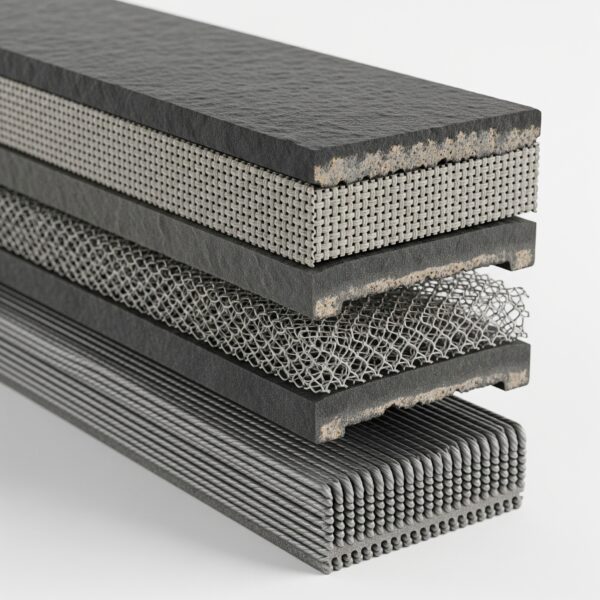
The internal fabric plies are the unsung heroes, providing the crucial tensile strength required for continuous operation. Typically made from synthetic fibers like polyester or nylon, these layers are designed to withstand immense tension and resist stretching. Belting Headquarters prioritizes belts with robust ply construction, ensuring your equipment can handle the toughest baling conditions without premature failure.
The Outer Layer: Rubber Compound and Tread
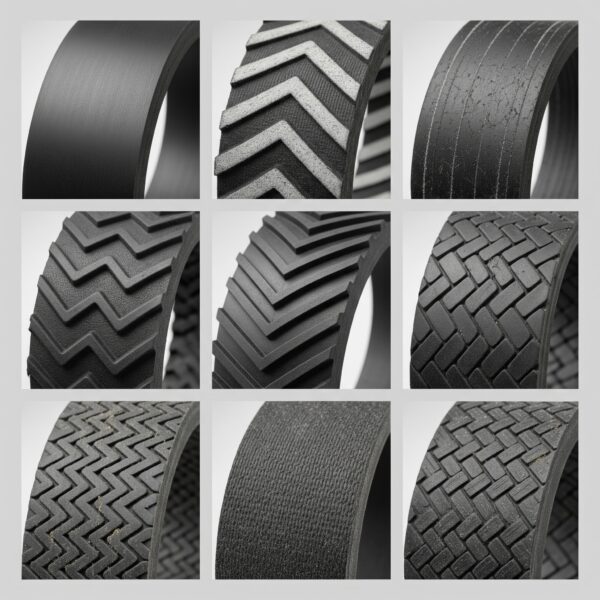
The exterior rubber compound is engineered for grip, flexibility, and resistance to wear and tear from abrasive materials. The specific blend of rubber significantly impacts longevity and performance in varying weather. Furthermore, the tread pattern on the outer surface plays a vital role in gripping and conveying crops efficiently within the baler. We ensure our belts feature compounds and treads optimized for maximum efficiency.
Connecting the Ends: Lacing and Splicing Methods
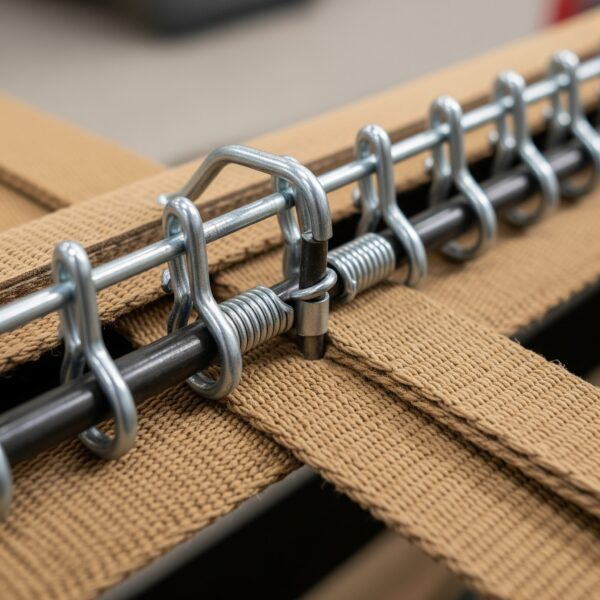
The method of connecting the two ends of a baler belt—whether through mechanical lacing or vulcanized splicing—is critical for overall integrity. A strong splice ensures a seamless loop that distributes tension evenly across the belt, minimizing weak points. Belting Headquarters offers various lacing options to suit different baler models, all designed for secure and long-lasting connections, contributing to the belt’s reliable function.
Edge Reinforcement: Protecting Against Wear
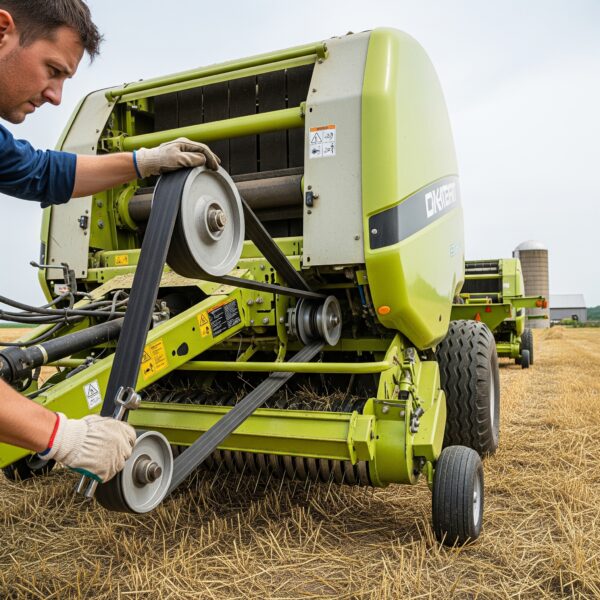
The edges of a baler belt are often subjected to significant friction and abrasion as they rub against the baler chamber. Reinforced edges, sometimes with specialized rubber formulations or extra fabric plies, are crucial for preventing fraying and premature wear. This reinforcement significantly extends the life of the belt, protecting your investment.
Understanding the anatomy of baler belts empowers you to make informed decisions for your farm. At Belting Headquarters, we’re dedicated to supplying only top-tier American-made replacement baler belts engineered for durability and peak performance. Learn how Belting Headquarters can equip your operation with the high-quality belts you need for a successful season. Explore our extensive inventory today!
Shop Belts